



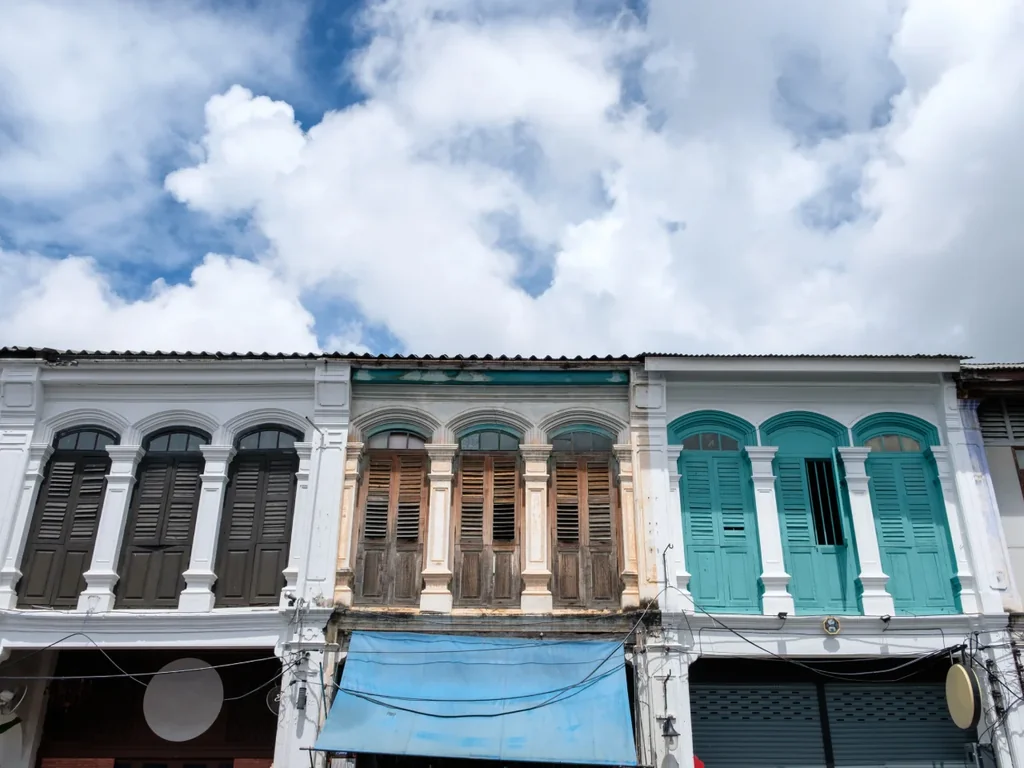
This two-day Phuket Old Town itinerary gives first-time visitors enough time to understand the historic quarter, eat well and wander without turning a short stay into a checklist. The old town is compact, but it deserves more than a quick photo stop between beach plans. Its streets hold the traces of Phuket’s trading and tin-mining past, and the pace changes noticeably between the morning, late afternoon and Sunday market hours.
Use the first day for the streets and the stories behind them. Keep the second day loose for a museum, local food and the walking street if your dates line up. You will see more by leaving space for a long lunch, rain showers or a café break than by trying to cover the whole island.
Before you set out
Phuket Old Town is a district, not a single attraction. The Tourism Authority of Thailand identifies Thalang, Dibuk, Phang Nga, Yaowarat and Krabi roads, plus Soi Romanee, as part of the historic area. They are close enough to explore on foot, so group stops by street rather than taking short rides between every landmark.
Start early if you want quieter pavements and clearer views of the shophouse façades. Carry water, dress for heat and rain, and keep flexible footwear on if you plan to walk for several hours. Most of the route is about looking closely: tiled floors, shutters, five-foot ways and restored shopfronts are easy to miss when you rush.
If you are staying at Blu Monkey, the official hotel site lists Thalang Road and Soi Romanee as 800 metres away. That makes an unhurried walk into the old town practical, but check your preferred map route and the weather on the day.
Day 1: heritage streets, slow walking and a proper local meal
Morning: begin around Thalang Road and Soi Romanee
Set out after breakfast and make Thalang Road your first reference point. It is the sensible place to get your bearings, not a street to race through. Look up at the narrow, connected shophouse façades, then take your time at the smaller lanes instead of photographing only the busiest stretch.
From Thalang, turn into Soi Romanee. The short lane is known for its colourful buildings and is easy to fold into the route without creating a detour. Continue towards Dibuk Road at a relaxed pace. This order keeps the first morning focused on the historic streets rather than on a long list of individual cafés.
For background on the details you are seeing, read Phuket Old Town Heritage and Design. The point is not to identify every architectural feature on the spot. It is to notice how the streets reflect the communities that traded and settled here.
Lunch: choose one dish, not an overplanned food crawl
Old Town food is part of the visit, but trying five famous places in one afternoon usually means queues and waste. Choose one substantial local meal, then leave room for a snack later.
A useful option if it fits your route and its current opening times is Mee Ton Poe on Phuket Road. Tourism Authority of Thailand describes it as a long-running, three-generation noodle shop known for charcoal-cooked stir-fried noodles, with Phuketian snacks such as fish cakes also on the menu. Its listed address is 214/7-8 Phuket Road. Check opening hours directly before walking over, especially on a short stay.
If you would rather keep the meal spontaneous, look for one local shop serving a dish you genuinely want to try. The old town’s food culture includes Chinese-style fried noodles, a-pong pancakes and kanom jeen rice noodles. Do not treat every dish as a mandatory stop. A sit-down lunch and a cold drink will do more for the rest of the day than another queue.
Afternoon: add context at Phuket Thai Hua Museum
After lunch, walk to Phuket Thai Hua Museum at 28 Krabi Road. The museum occupies a two-storey Sino-Portuguese building that originally operated as a Hokkien Chinese school. Its exhibitions cover the history, customs and traditions of Hokkien Chinese migrants in Phuket, which gives useful context to the streets you have just walked.
The Tourism Authority of Thailand currently lists foreign adult admission at 200 baht and foreign child admission at 120 baht. Opening hours and special arrangements can change, so confirm them with the museum before building the day around a visit. If it is closed, do not try to replace it with a distant attraction. Spend the time on Krabi Road, Dibuk Road and a café break instead.
Evening: stop while the old town still feels enjoyable
Use the first evening for a simple dinner near where you finish, then return to your accommodation. This is deliberately not a sunset itinerary. A beach viewpoint on the other side of Phuket makes the route less relaxing and adds transport uncertainty. Save the energy for a second day with a different rhythm.
Day 2: deepen the visit and plan around Sunday if it applies
Morning: revisit one area rather than starting from zero
Begin Day 2 with the part of the old town that interested you most on Day 1. A second pass in the morning is often more rewarding than chasing a new list of sights. You might focus on Phang Nga Road and Yaowarat Road, or take a slower look at the side streets around your previous route.
This is also a good time for a breakfast or snack stop. The Tourism Authority of Thailand notes that the old quarter has street-food stalls, hawker hubs and family-run restaurants, with local pancakes, fried noodles and other dishes reflecting the island’s cultural influences. Choose a place that is open and looks comfortably busy, rather than navigating across town for a venue with uncertain hours.
Midday: leave a flexible block
Keep the middle of Day 2 open. In hot or wet weather, use it for a long lunch, a museum you have confirmed is open, or a return to your room before the evening. In dry weather, use the time for the streets you skipped on Day 1.
This gap is what makes a two-day Phuket Old Town itinerary work. It allows for a late start, a downpour, a closed venue or simply an enjoyable meal without losing the rest of the plan. First-time visitors often underestimate how much better the old town feels when there is no pressure to reach an attraction every hour.
Late afternoon and evening: Sunday Walking Street, if your visit falls on Sunday
If your second day is a Sunday, make Thalang Road the evening focus. The Tourism Authority of Thailand lists the Phuket Old Town walking street as running along Thalang Road from 16:00 to 22:00 on Sundays. Arrive near the start if you prefer a little more room to browse, then treat the market as your dinner and snack stop rather than adding a separate restaurant reservation.
Expect more people and a slower pace than in the morning. Pick one direction, pause at stalls that interest you and accept that you will not see everything. Verify the market schedule before you go, as local events can change.
If your trip does not include a Sunday, do not try to recreate the market experience. Spend the evening on a quieter heritage street, choose dinner nearby and enjoy the difference between daytime and night lighting. The itinerary still works without the walking street.
A route that stays realistic
The most common mistake is treating Old Town as a half-day add-on to a beach, island tour or viewpoint. Keep these two days centred on Phuket Town. The walking itself is manageable, but the heat, meals, traffic and venue hours are what shape the day.
A simple rule helps: plan one anchor each morning and one each afternoon. For this itinerary, the anchors are the heritage streets, a local meal, Phuket Thai Hua Museum if open and Sunday Walking Street if applicable. Everything else is optional.
For a short city stay, it also helps to sleep close enough that you can take a break rather than carry on through the hottest part of the afternoon. Browse rooms and current offers at Blu Monkey before finalising your dates. The property website lists rooms and direct-booking offers, both subject to availability and the terms shown at the time of booking.
Quick planning checklist
- Check the weather and use rain or midday heat as a reason to slow the route down.
- Confirm museum opening hours and admission details directly before your visit.
- Check the Sunday Walking Street schedule if the market is important to your plan.
- Choose one proper food stop per half-day rather than building a queue-heavy food crawl.
- Keep Day 2 flexible, particularly if you are arriving in Phuket on the first morning.
- Treat the old town as a walkable district, not a series of rides between pins on a map.
Two days will not reveal every story behind Phuket Old Town, but they are enough for a first visit that feels grounded. Walk the streets more than once, eat when you are hungry and let the timetable bend around the place rather than the other way around.